Published 2 October 2026. Sources checked on that date. This guide covers houses in England; the rules in Wales, Scotland and Northern Ireland are different.
A permeable driveway lets rain soak through the surface and the layers beneath it into the ground, so water does not run off into the road and the drains. If the driveway is not permeable, the rain has to be sent somewhere on your own land that can take it, such as a lawn, a border, a rain garden or a soakaway, and that soakaway must never be the drainage field of a septic tank.
Whether a front garden driveway needs planning permission is covered in our separate guide to planning permission for driveways. This guide is about the next question: once the surface is down, where does the water actually go?
Why does it matter where driveway water goes?
The rule on paving front gardens came in after the 2007 floods. The government's guidance on the permeable surfacing of front gardens explains that one or two paved gardens may not seem to make a difference, but many paved gardens in a street add up and increase the risk of flooding. It also points out that hard surfaces collect oil, petrol and brake dust, which is washed into drains that often run straight to streams and rivers. In older areas, rainwater may go into the foul sewer, which takes household waste to the sewage works.
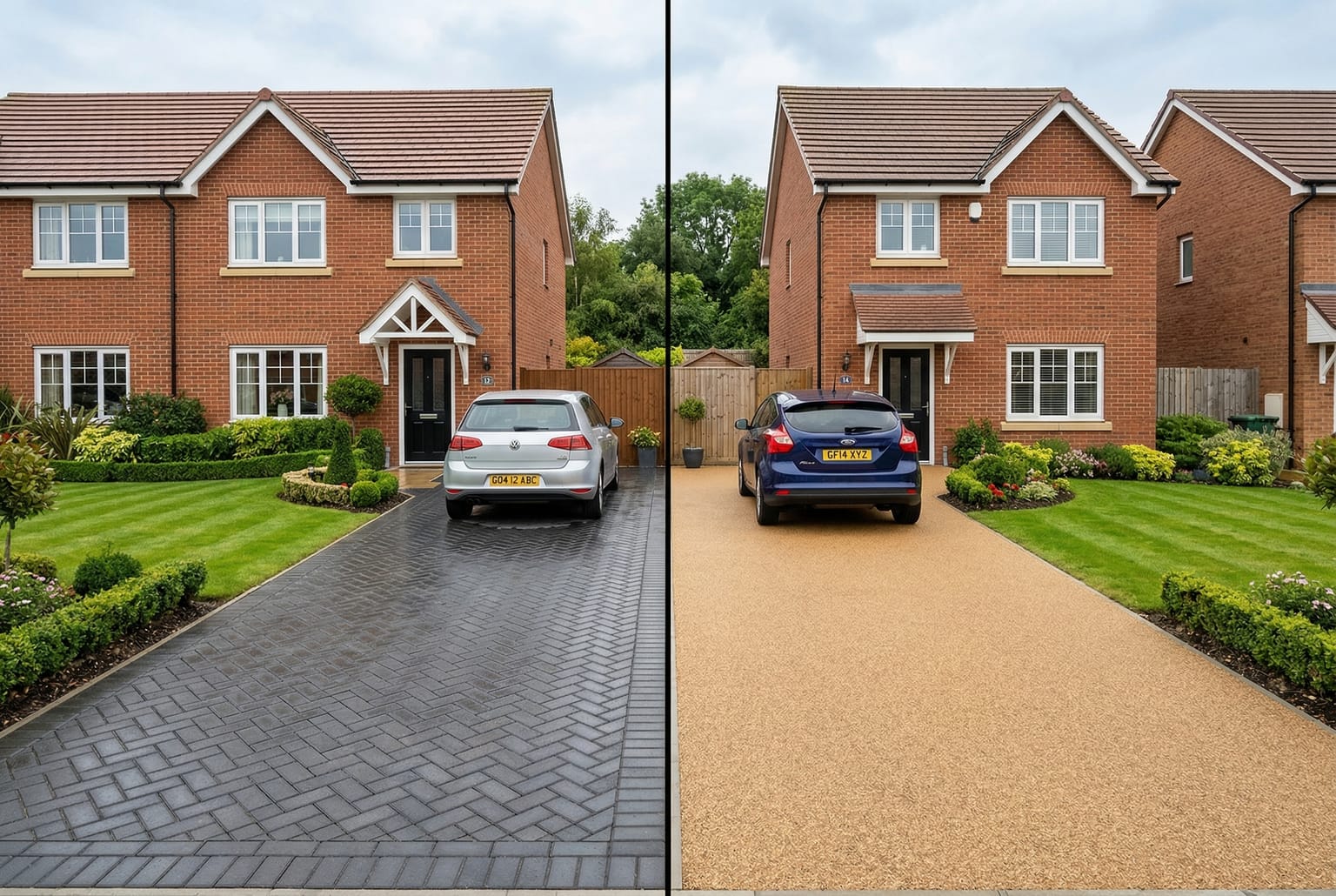
The Planning Portal summarises the result: you do not need planning permission for a new or replacement driveway of any size if it uses permeable surfacing, such as gravel, permeable concrete block paving or porous asphalt, or if the rainwater is directed to a lawn or border to drain naturally. Covering more than five square metres with a traditional impermeable surface that does not let water run to a permeable area needs permission.
What makes a driveway permeable?
It is not only the top surface. The GOV.UK guidance notes that conventional driveways are built on a sub-base, often called hardcore or MOT Type 1, which contains a lot of fine sand and silt and does not let water through easily. A permeable driveway needs a sub-base that water can pass through as well as a surface that lets it in.
Common permeable choices are:
- Gravel on a free-draining base
- Permeable block paving, with wider joints and a permeable sub-base
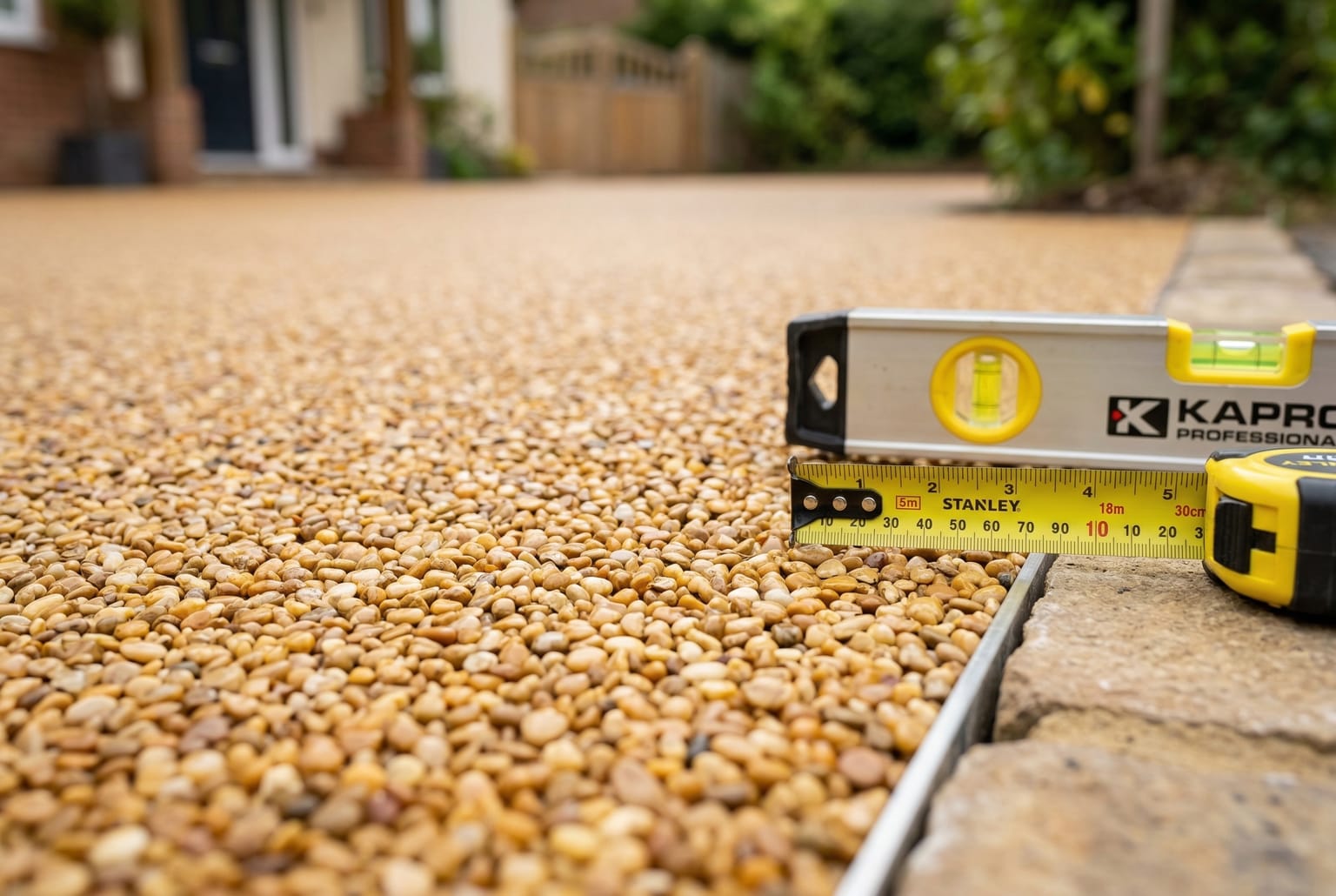
- Resin bound surfacing laid on a permeable base, not over old tarmac or concrete
- Porous asphalt or concrete designed to let water through
Does the ground under my driveway matter?
Yes. The GOV.UK guidance says the soil below a permeable driveway or rain garden must be sandy or gravelly rather than clay, otherwise a connection to the drains may be needed. On very clayey sites it suggests including a pipe as a precaution, so that water which cannot soak away has somewhere to go.
It also covers contaminated land. If your home is built on a site that was contaminated by an earlier use, the shallow soils may have been designed to stop water soaking in. In that case the paved area has to be connected to the drains instead.
If the surface is not permeable, where should the water go?
The building regulations set an order of priority for rainwater from roofs and paved areas. Requirement H3 in Approved Document H says it should go to:
- an adequate soakaway or other infiltration system, or, where that is not reasonably practicable,
- a watercourse, or, where that is not reasonably practicable,
- a sewer.
For paths and driveways, Approved Document H says they should drain freely to a pervious area such as grass, provided the water is not discharged next to buildings where it could damage foundations, and the ground is not overloaded. The edge of the paving should be flush with or above the surrounding ground so the water can run off. Where the ground cannot take the flow, filter drains may be used.
The GOV.UK front gardens guidance adds two practical points: slope the driveway away from the house where possible, and do not direct water towards a neighbour's property.
How far from the house should a soakaway be?
The two official sources give different figures, so it is worth knowing both:
- The GOV.UK front gardens guidance says that for small driveways a minimum distance of 3 metres should be suitable, but that it depends on ground conditions and a greater distance may be needed.
- Approved Document H (paragraph 3.25) says infiltration devices such as soakaways should not be built within 5 metres of a building or road, in unstable ground, or where the water table reaches the bottom of the soakaway at any time of year.
If your installer proposes a soakaway, ask which guidance they are working to and how they have checked the ground. Approved Document H says soakaway capacity should be based on percolation tests, which show how quickly water drains into the soil.
Can driveway water go into a septic tank or drainage field?
No. This is where driveways and off-mains drainage meet, and it catches people out in rural areas.
A drainage field is the network of perforated pipes that spreads treated effluent from a septic tank or treatment plant into the ground. It is part of the sewage treatment, not a rainwater soakaway. Approved Document H expects a drainage field to sit at least 15 metres from any building and at least 10 metres from any watercourse, and says that no access roads, driveways or paved areas should be located within the disposal area. It also says soakaways must be far enough from any drainage field that the ground's overall soakage capacity is not exceeded.
Sending roof or driveway water into the foul system can overload it. Septic Tank Advice explains the warning signs of a failing drainage field and why clean surface water should be kept away from it. If you are planning a new driveway on a property with off-mains drainage, find out where the tank and field are before any digging, and read its guide to planning a new off-mains drainage system if the drainage itself is being moved or replaced.
What about the water from my roof?
Downpipes often discharge onto or next to a driveway. If that water is meant to soak into a permeable driveway or a soakaway, it needs to be included when the drainage is designed. If the gutters overflow or the downpipes are blocked, the water ends up in the wrong place regardless of the surface. Nationwide Roofing Specialists has more on keeping gutters and downpipes working.
Questions homeowners ask
Is gravel always permeable? Only if the base under it lets water through. Gravel laid over compacted hardcore with a lot of fine material, or over an old concrete slab, will not drain well.
Do I need a soakaway for a permeable driveway? Not usually, if the surface, the sub-base and the soil let water soak in. On clay or contaminated ground the GOV.UK guidance says a connection to the drains, or a pipe as a back-up, may be needed.
Can I connect my driveway drain to the sewer? Approved Document H puts a sewer last in the order of priority, after a soakaway or a watercourse. Your water company and building control can tell you what is allowed at your property.
Can a driveway go over a septic tank drainage field? Approved Document H says no access roads, driveways or paved areas should be located within the disposal area.
Get free quotes from local driveway companies
If you are planning a permeable driveway, or need to sort out where the water from an existing one goes, you can get free quotes from local driveway companies. Better Driveways is run by Better Home Hub Ltd, an introduction service: we do not carry out driveway work ourselves, and a specialist we introduce you to may pay Better Home Hub a fee. It is still your responsibility to check that any permission you need is in place.