Last reviewed: September 2026.
Choosing between block paving and resin bound is one of the most common decisions homeowners face when planning a new driveway. Both are good options, but they suit different properties and priorities. Here's a straightforward comparison to help you decide.
Appearance
Block paving offers a traditional, structured look with a huge range of colours, patterns and laying styles. It suits period properties, cottage-style homes and anyone who likes a classic look. Herringbone, basketweave and stretcher bond patterns all create a distinctive entrance.
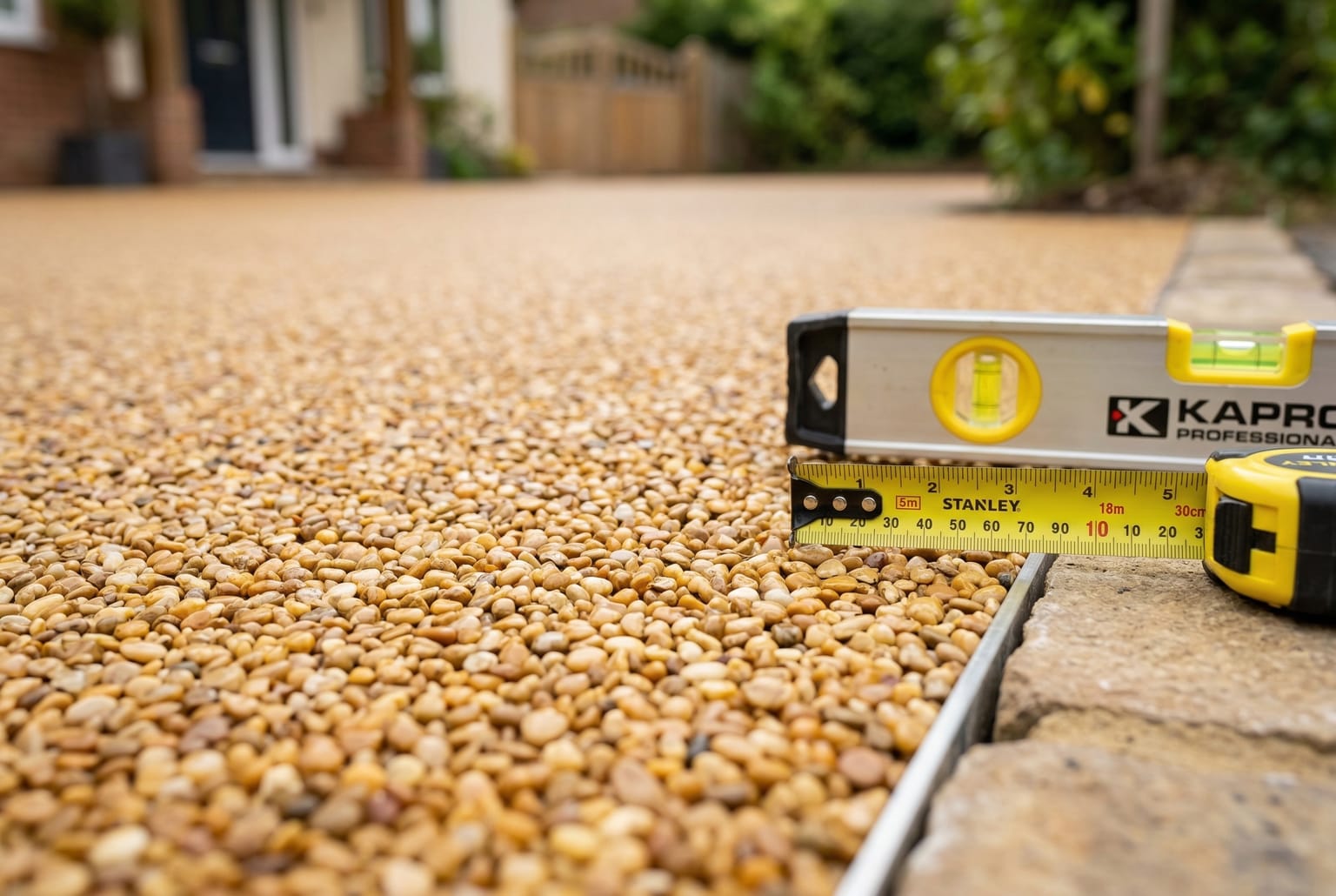
Resin bound gives a smooth, contemporary finish with a seamless surface. The natural aggregate creates a subtle look that suits modern builds, renovated homes and minimalist designs, and there's a wide range of colour blends.
Verdict: It depends on your property. Traditional homes often suit block paving; modern homes tend to look better with resin.
Cost
UK cost guides reviewed in September 2026 put both materials in a similar bracket for a new, fully installed driveway:
- Block paving: typically £50 – £120 per m²
- Resin bound: typically £60 – £95 per m²
Block paving takes longer to lay (cost guides suggest around 4 to 6 days for a 60m² driveway, against 3 to 5 days for resin), and the price of both depends heavily on the groundwork needed. These are typical ranges, not quotes.
Durability and Lifespan
Block paving is hard-wearing when laid on a well-built sub-base, and individual blocks can be lifted and replaced if they are damaged or stained, which is a real advantage.
Resin bound is commonly quoted as lasting around 20 to 25 years when installed correctly. Repairs to a damaged patch are harder to hide than replacing a few blocks.
Verdict: Block paving has the edge on repairability. How long either lasts depends mostly on the quality of the installation.
Maintenance
Block paving needs regular care to stay looking its best. Weeds and moss can grow in the joints, the joints need re-sanding from time to time, and blocks can shift or sink if the sub-base was poorly prepared.
Resin bound needs less routine maintenance. The smooth surface resists weeds, and sweeping and an occasional wash keep it looking fresh.
Verdict: Resin bound usually wins for low maintenance.
Permeability and Planning Permission
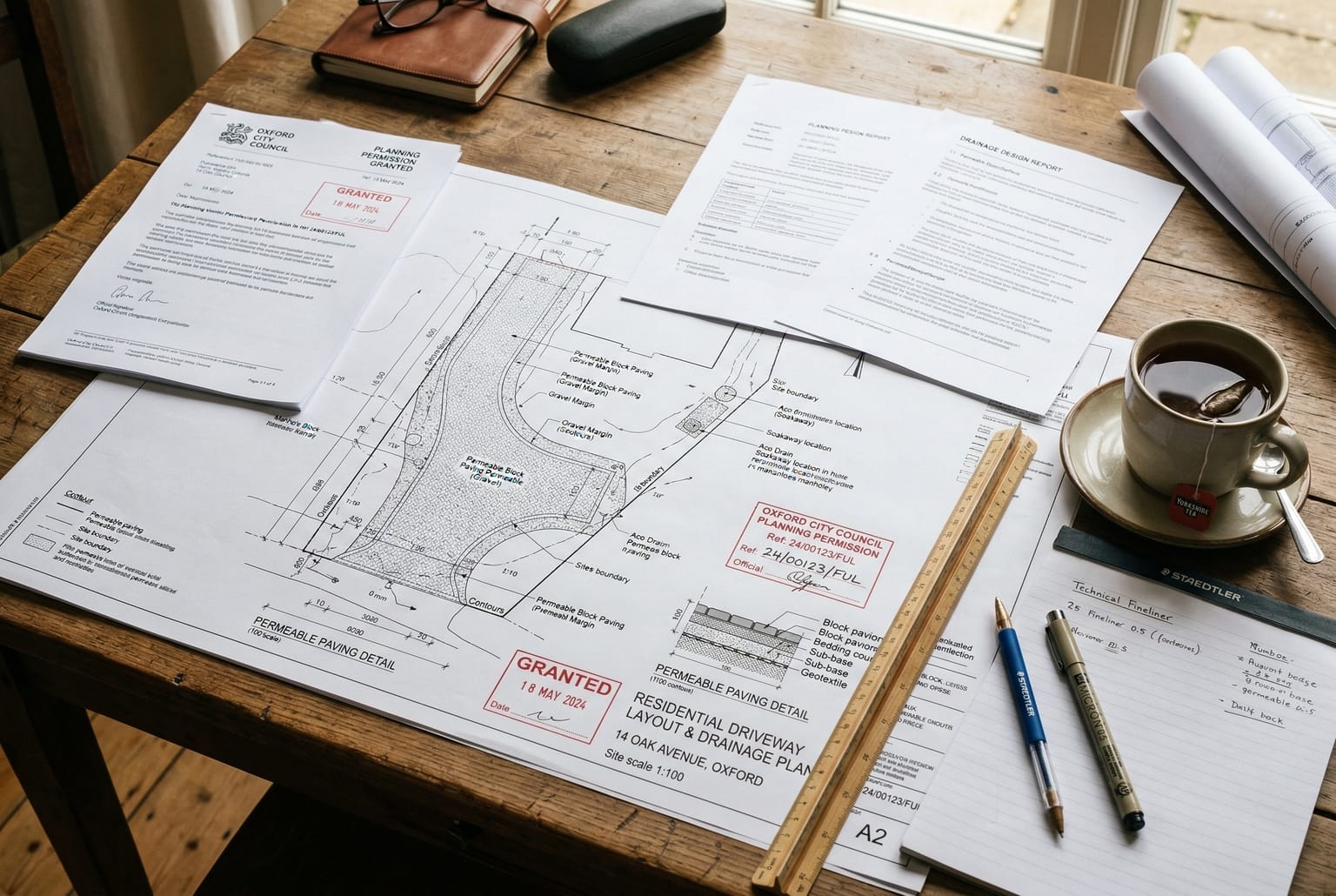
In England, if you pave more than 5m² of a house's front garden, the surface either needs to be permeable or the rainwater needs to run to a lawn, border or soakaway on your property. Otherwise you'll need planning permission.
Resin bound is porous, but it only drains if it is laid on a permeable base. Laid over old tarmac or concrete, water can't soak through.
Block paving can be permeable if permeable blocks and jointing are laid on a permeable sub-base. Standard block paving is not permeable.
Verdict: Either can meet the rule if it's built the right way. Ask the installer exactly how the drainage will work.
Which Suits Your Property?
Choose block paving if:
- You have a period or traditional property
- You want a wide choice of patterns and styles
- Being able to replace individual damaged sections matters to you
- You don't mind occasional maintenance
Choose resin bound if:
- You prefer a sleek, modern look
- Low maintenance is important to you
- Your driveway has curves or irregular shapes
- You're happy to confirm the base will let water drain, or that run-off has somewhere to go
Still Unsure?
The best way to decide is to talk to an experienced installer who can look at your property. Ask for a written quote, what the guarantee covers and proof of insurance before you agree to anything.
You can send an enquiry to be introduced to a local specialist. Better Driveways is run by Better Home Hub Ltd, an introduction service that doesn't carry out driveway work. It's free to use with no obligation, and a specialist we introduce you to may pay Better Home Hub a fee.